Back in All Blacks

So I’m back from vacation and ready to head into work tomorrow. I’m almost over jet lag, but Patrick still thinks his bedtime is his afternoon nap. I slept thru the Tri Nations match yesterday morning, where the New Zealand All Blacks, my new-favorite rugby team, got beat bad by the South Africa Springboks. After losing to the Australia Wallabies while we were in Sydney, the All Blacks are out of the running for the Tri-Nations Cup. Winner of next weeks’ match between South Africa and Australia takes it. (note – apparently, severalreaderspointedout that I got my cups mixed up. Bledisloe Cup is between New Zealand and Australia only, and since NZ and Aus drew in their home and home series, NZ keeps that cup.)

I didn’t blog any of my vacation as it was happening, but I want to revisit two items that I think will be interesting to my blog readers – the Buildings of Sydney and the Sydney Opera House.
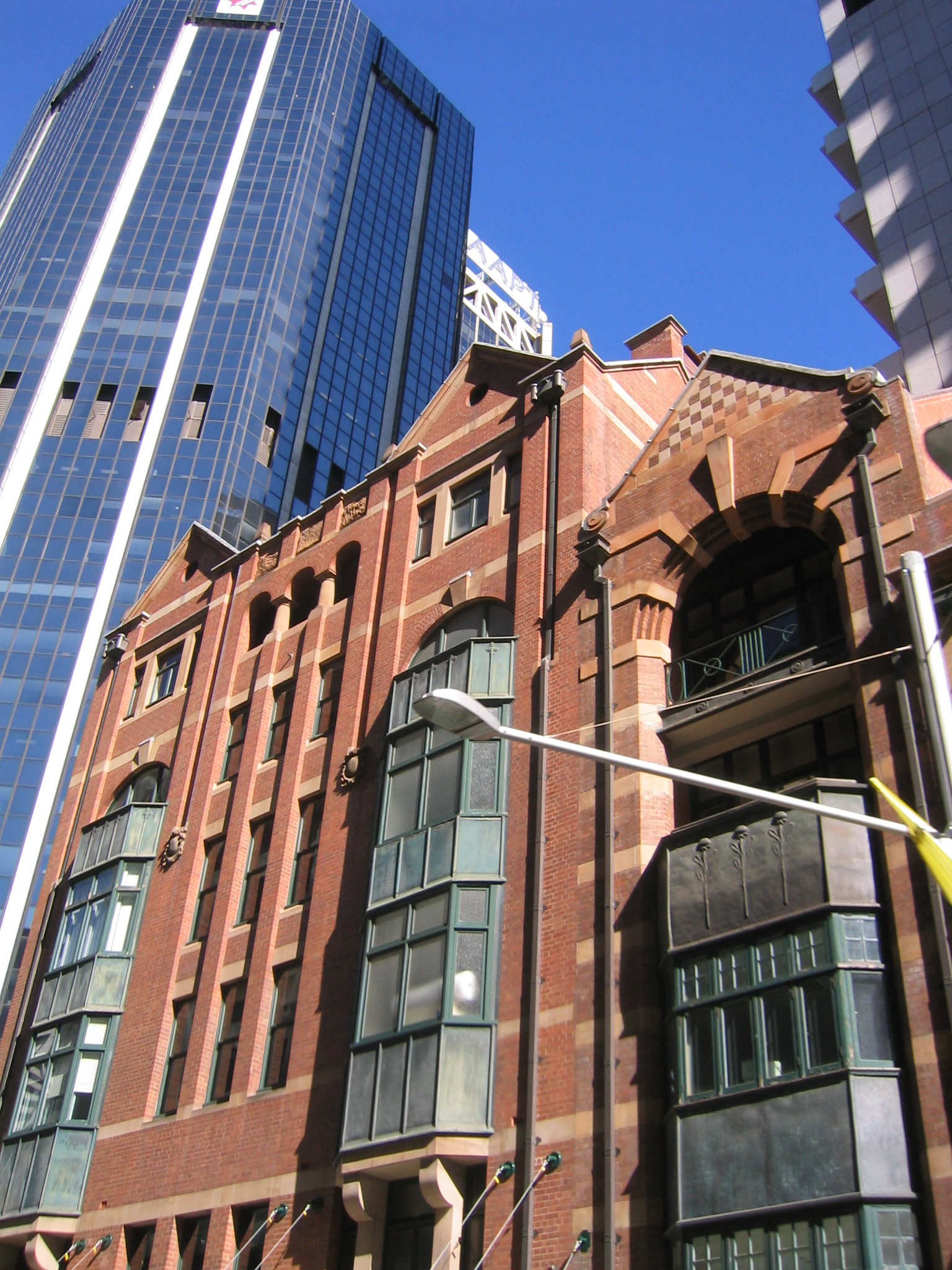
I went to Australia (and New Zealand) to present Metropolis. Delivering this talk (as well as the follow-up talk on Buildings and Applications) has changed the way I look at buildings and cities. I’ve lived in three different cities – Washington DC, Los Angeles and Seattle. DC is filled with old buildings, but there are no skyscrapers. No building in DC is allowed to be taller than the Washington Monument. Seattle is relatively young, and there was a big fire in 1889 that destroyed a great deal of the city. Los Angeles is…well…I’ve blogged my opinion of Los Angeles before. LA is like a movie set – it only looks good on TV. Drive around LA and you’ll find miles and miles of mini malls, but no history.
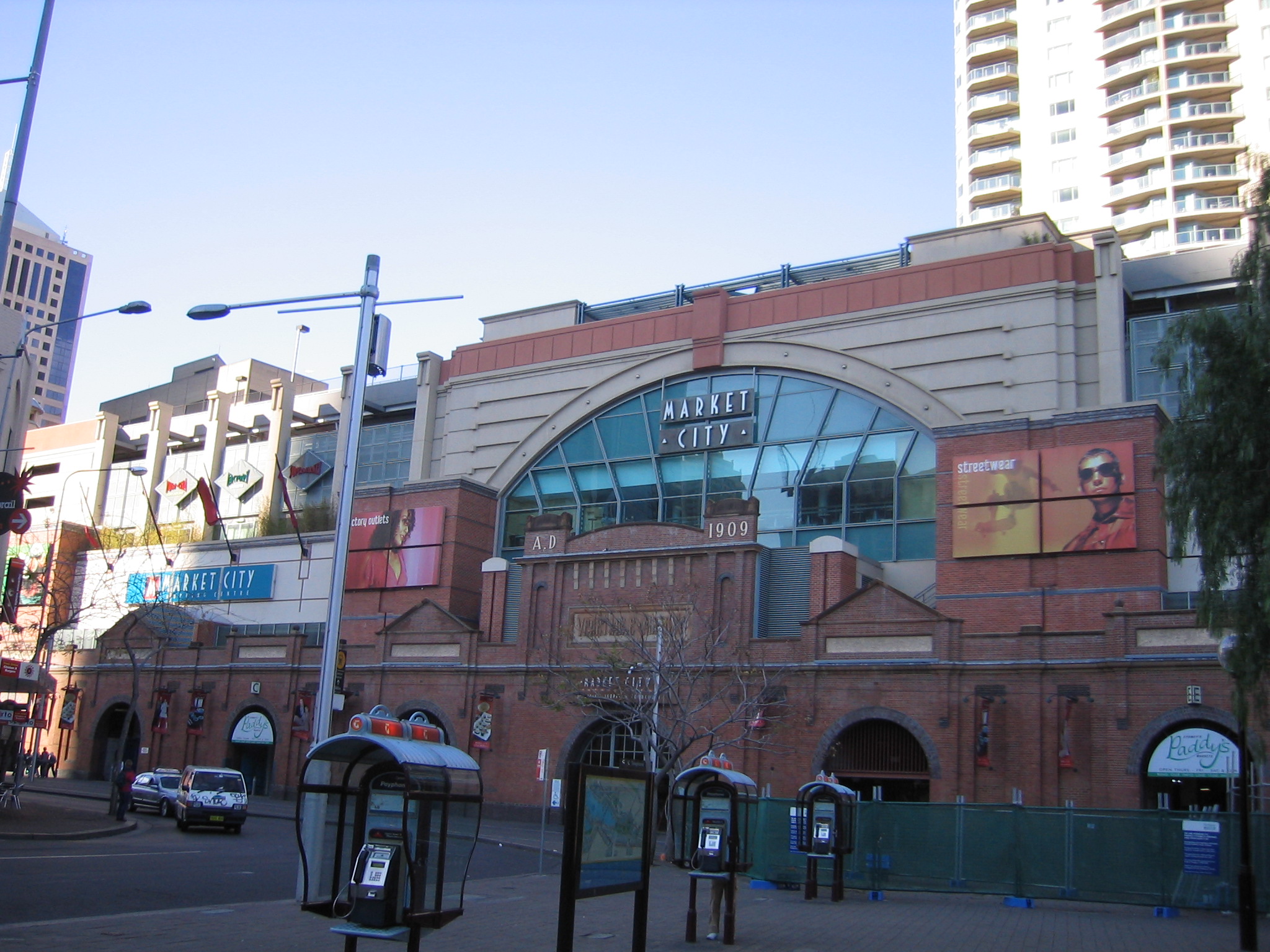
Sydney is very different. Many of the older buildings are under “heritage protection” meaning that their facade’s are protected and can’t be changed. This leads to a fascinating mix of older buildings side by side with modern skyscrapers. Paddy’s Markets, which has been there since at least 1834, is housed in a building originally built in 1909 (according to the building’s facade). However, if you check out the picture, you’ll notice that the building’s second floor is notably more modern than the first floor. That’s Sydney to a “T”, new sitting right next to, or on top of, the old. I imagine that some of the older eastern seaboard cities of America have the same combination of historical and current, but none that I’ve spent a significant amount of time in.
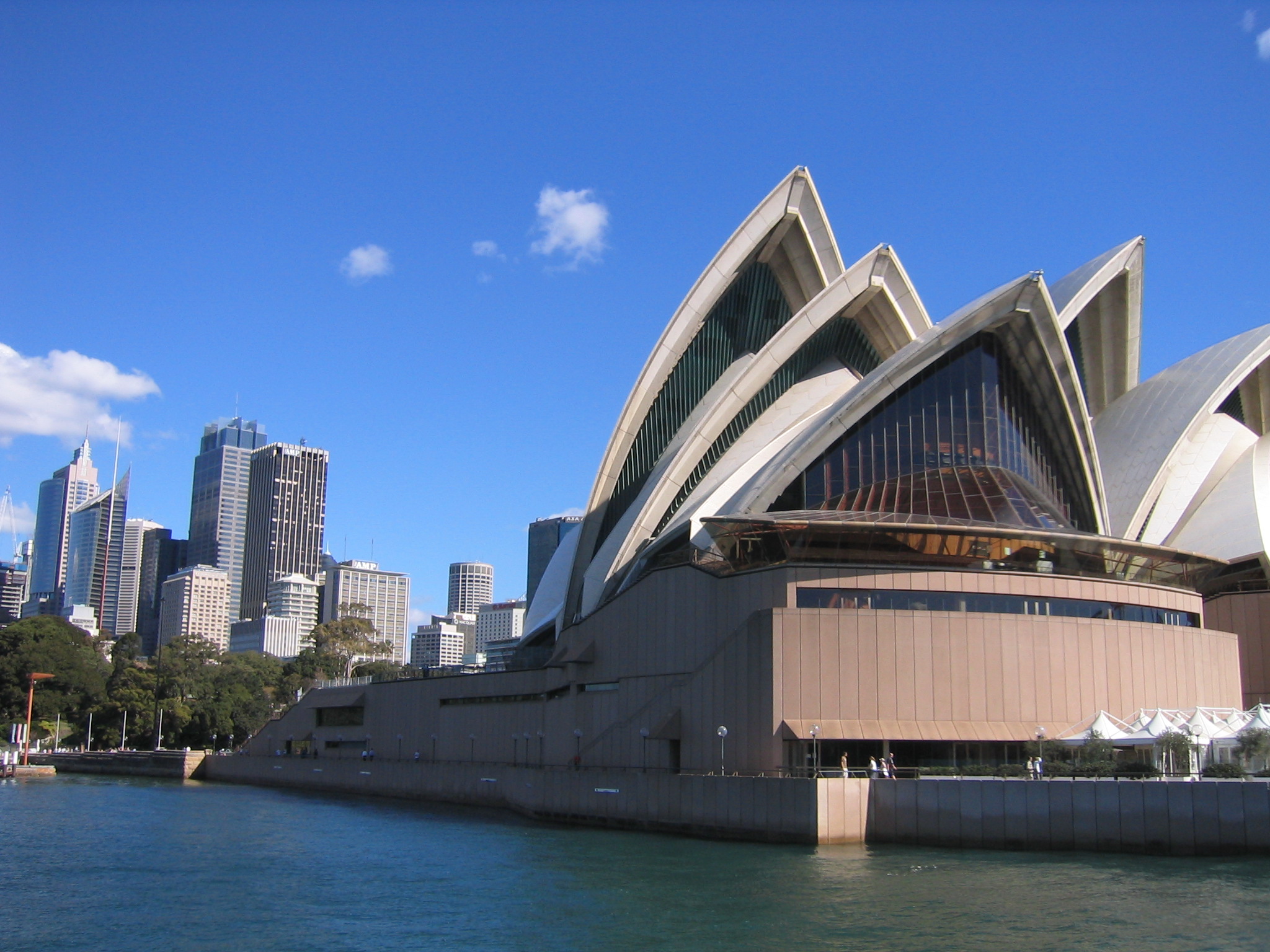
Of course, you can’t go to Sydney and not visit the world famous Sydney Opera House. You can read the history online, so I wont bore you with those details. But here’s something you probably don’t know about the opera house – it’s a pretty dinky opera house as opera houses go. My mother works for the Washington National Opera and I grew up hanging around the Kennedy Center so I’ve been around opera all my life. (Betcha didn’t know that about me, did ya?) The Opera Theatre of the Sydney Opera House only holds 1547 people, only about two-thirds of the Kennedy Center Opera House. It also has limited fly, wing and back stage space – the unique sail roof structure severely limits off stage space. (This isn’t an issue in the Concert Hall, which is housed under the larger sail roof and has less need for off stage space.) I found it very interesting that, as opera houses go, the Sydney Opera House looks great from the outside, but isn’t that well thought out on the inside. This comes back to Metropolis metaphor as well – what’s on the outside (in this case, the roof) severely limits what you can build on the inside (i.e. the theatre). In the case of the Sydney Opera House, it’s no problem as people come from all over the world to see shows there, even if the house creates unique logistical challenges for the company putting on the show. For enterprise apps, you probably won’t be so lucky, so design your roof with great care.

I’m back at work tomorrow, so watch this space.

JOURNAL 3

I know I’m on vacation, but I had to blog this. The third issue of Architects JOURNAL is online. The first article from J3 is about Software Factories. It’s is the first of a four part series. You can check out the second article in the series from our brand new Software Factories page on Architecture Center.

Update: My pal Chris (who is blogless at this point) pointed out an article in eWeek on Software Factories.

Amazing Cheese

I’ve blogged about cheese before, but it was in jest. However, the cheese here in Australia and New Zealand has been awesome. It’s like going to Tahiti and eating pineapple. When you come home to the same old stuff, it’s a real let down. Maybe I need to stop making fun of my coworker Earnie (he’s the one who showed me the American Cheese Society annual conference and awards).

Done in Australia

My presentations are done. I have one more analyst meeting, and then I am officially on vacation down under for a week. I’m stoked (but don’t expect too much blog traffic around here).

Doing both talks twice in the space of a week really helped improve my delivery. I still think the Data in SOA talk didn’t go quite as well as the Metropolis talk, but the gap narrowed this time. Also helped that they were on separate days this time. I got lots of great questions afterwards. A couple of gentlemen from the Australian government grabbed me for over an hour after my Metropolis talk yesterday – one from Dept of Defense, the other from Dept of Statistics. At the Federal Architect Forum earlier this year, I spent some time with an architect from the US DoD and I’m coming to the conclusion that compared to most government agencies, DoD seems to be ahead of the curve on architecture. Of course, when you measure failure in human life, it behooves you to stay ahead of the curve. We were discussing business process and the gentleman from Aus DoD pointed out that we “mangle business processes in order to fit them into technology implementations.” Very true. We even got into some social aspects. For example, the battlefield leaders of tomorrow are in their teens today, so they are looking at how teens communicate today. They want their battle systems of the future present information optimally for those future leaders. Each generation tends to communicate differently than previous generations. His 16 year old doesn’t read or write well, but he can IM chat 6 people, send phone text messages and talk on the phone all at the same time. How will future battle systems leverage that ability. Fascinating.

We head back to Sydney tomorrow evening. This afternoon and tomorrow, we’re off to find a kangaroo petting zoo and take a tour of Canberra. There’s a big rugby match on Saturday – the Qantas Wallabies vs. the New Zealand All Blacks competing for the Bledisloe Cup. It’s sold out, but it will be on TV. There’s something about the passion of large scale sporting events like this. My parents and brother went to several matches of Euro 04, including the England vs. Portugal game that sent England home in penalty kicks. The parting after went on all night. World Cup 98 in France was the same way every time France won (though we had gone home by the final game that France won – I’ll bet that was quite the party). I know nothing about Rugby, but I’m keen to learn.

Slight Nomad Issue Solved

I’ve had my Nomad Zen for just over a month now. I’ve loaded almost 6500 tracks from 525 albums and it’s only about half full. However, I did have a slight issue with it. Walking across campus the other day, I tripped over my own damn feet. Luckily, the Nomad broke my fall 😦. I ripped the protective case and scuffed the LCD screen, but otherwise it didn’t seem any the worse for wear. However, when I fired it up on the flight to Sydney it wouldn’t work. It would boot and claim to be playing, but no music came out. If I selected a new song, it would freeze and needed a hard reboot or battery removal in order to shut down. I tried the reset button and reloading the firmware, no luck. Today, I searched Creative Labs’ knowledge base, searched for “zen xtra crash” and found an article on the Zen’s Rescue Mode. This allows you to Clean Up, Format All and Reload OS. Clean Up took a while – around 15 minutes – but it did the trick. I guess the rapid deceleration caused some temporary issue to the internal hard drive, but there don’t seem to be any residual effects. Even the song that I was listening to when I fell is fine.

Of course, no device is perfect. In addition to “Make Rescue Mode Easily Discoverable”, I have two minor quibbles with the device. First, it doesn’t draw power from the USB connection. With Red Chair’s Notmad Explorer, I can play the music from the Zen thru my computer’s speakers. I also use Notmad Explorer to convert my music from WMA lossless to WMA 96k when it transfers to the Zen. In both of these cases, the Zen is connected to the computer for a long period of time. It would be nice if I didn’t have to plug in both power and USB. Second (and more likely to be addressed as it’s a software issue) is that when you’re listening to a song, you can get it’s track details, displaying the artist and album names. It would be nice to be able to jump directly to the artist or album in the music library from the track details screen.

Minor quibbles aside, this is an awesome device.